
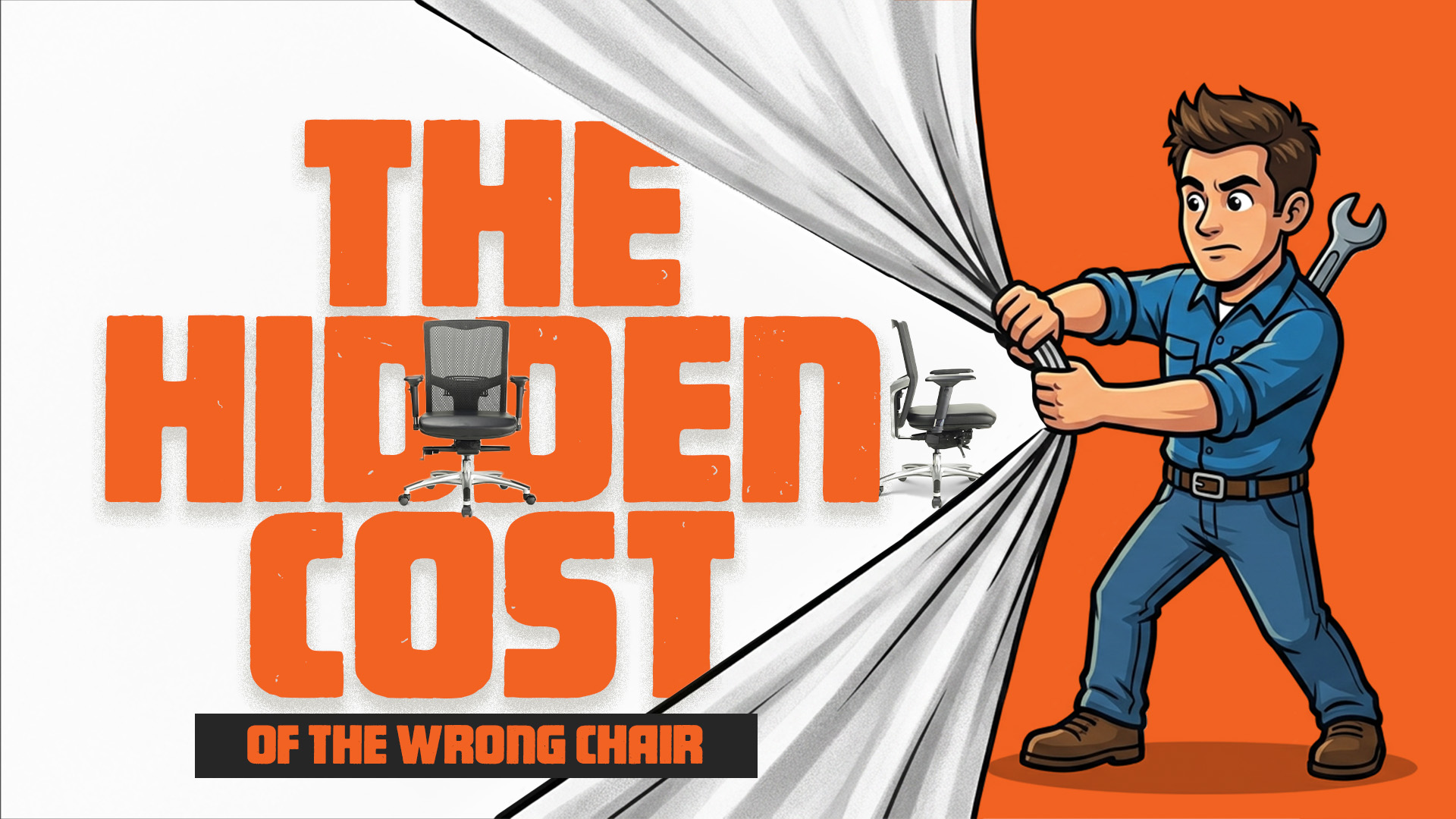
A chair that doesn't fit costs more than it looks like it does. Not in the price tag, in the small, constant friction it creates all day: shifting to get comfortable, standing up more than necessary, losing focus because something aches. None of that shows up on an invoice, but it shows up in how people work.
Fit isn't one-size-fits-all, and it isn't about how expensive a chair is either. A few things actually matter:
- Lumbar support that adjusts, not just exists. A fixed curve in the backrest helps some people and does nothing for others. Independent lumbar adjustment means the chair meets the person, not the average.
- Seat depth. If the front edge of the seat presses into the back of the knees, that's a sizing problem, not a posture problem. Adjustable seat depth fixes it in seconds.
- Armrests that move. Fixed armrests that sit too high or too low push shoulders out of a natural position for hours at a time. Height and width adjustment matters more than it gets credit for.
This is the whole idea behind ergonomic seating done properly: the chair should be doing quiet, constant work to support the person in it, not asking them to adapt to it. The Argento Ergonomic Task Chair is a good example of what that looks like in practice: independent lumbar and ratchet back height adjustment, seat depth adjustment, and 4D armrests that move in every direction a person actually needs.
None of this requires guessing. A short walk-through of your space can usually spot the mismatches fast, before they turn into complaints or worse.
Want a second opinion on whether your team's chairs actually fit them? Cubiture's design consultants offer a free workspace evaluation, no obligation.


